
Base Oil & Lubricant Market Update
June 05, 2026
What to expect on pricing and supply
We wanted to share a quick update on what’s happening in the base oil and lubricant market, since it’s affecting pricing and availability across the board right now.
The short version: we’re in the steepest lubricant pricing cycle in more than a decade, and it’s being driven by supply shortages — not normal demand. Disruption in the Middle East has choked off Group III base oil supply and pushed crude higher, and U.S. suppliers have been raising prices almost weekly.
How this cycle compares
There have been 37 separate price increases from 19 suppliers in 91 days — three full rounds, with a fourth already starting. The average increase is about 22%, nearly double the 2021–2022 disruption and packed into less than a third of the time. For some perspective, there were no price increases in 2025, creating a rapid shock to the overall market we are seeing today.
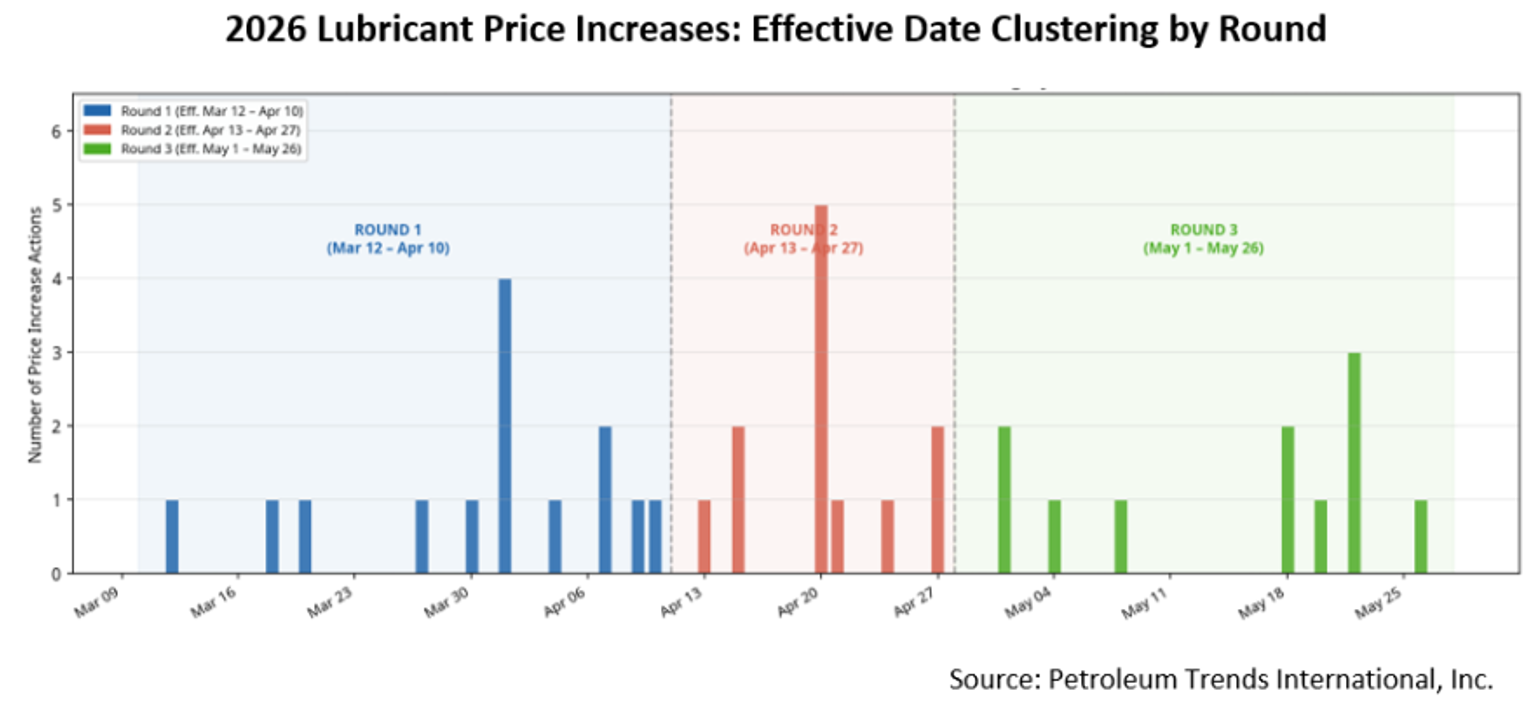
Figure 1. 2026 lubricant price increases effective date clustering by round. Source: JobbersWorld analysis.
Synthetics hit hardest
The biggest divide is between conventional and synthetic products. The Group III shortage has hit synthetics far harder. The tightest products are the low-viscosity OEM grades — 0W-8, 0W-16, and to a degree 0W-20 — where substitutes are limited.
That said, conventional blends aren’t insulated. When Group III base oil is scarce, blenders lean harder on Group I and Group II stocks to keep formulations running — and that added pull tightens Group I/II supply in turn. So even products that don’t rely on Group III are seeing upward price pressure from the spillover demand across the broader base oil market.
Where synthetics are tight, it’s worth asking about alternatives. In many applications there’s an OEM-approved alternative or equivalent product available, and in some cases OEMs permit a substitute grade. Whether that’s an option depends on the specific equipment and its warranty terms, so reach out before switching and we’ll help identify an in-spec alternative for your application.
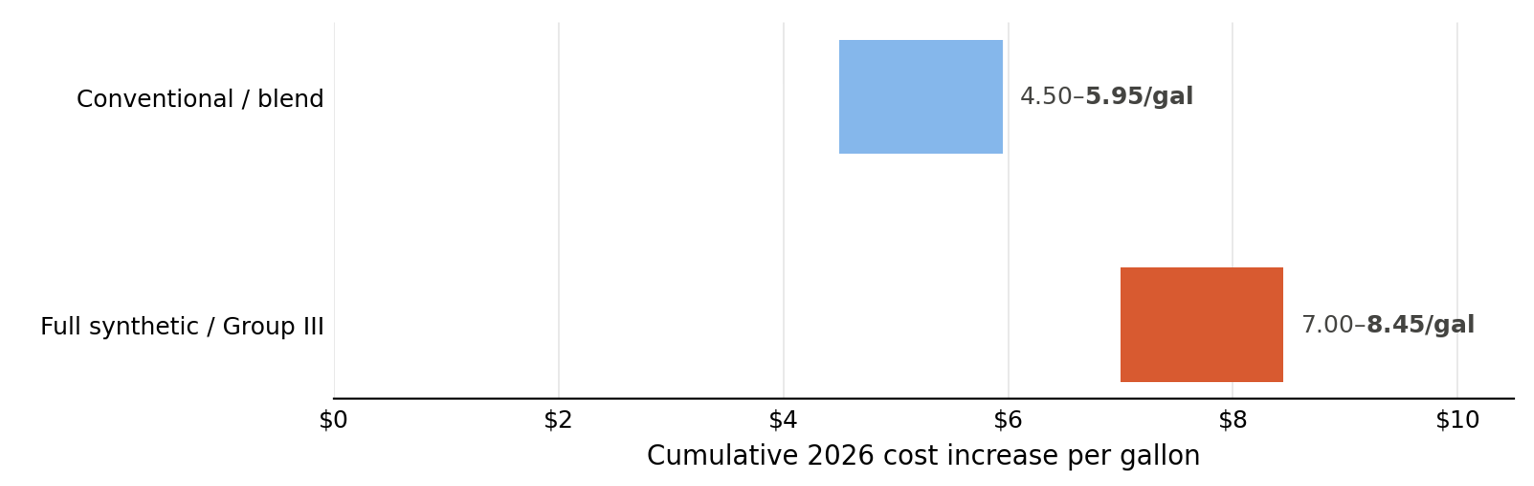
Figure 2. Cumulative 2026 cost increase per gallon, conventional vs. synthetic. The synthetic premium now runs ~$2.50/gal or more. Source: JobbersWorld market estimates.
Glycols are climbing
The same Middle East disruption is tightening the antifreeze and coolant supply chain. U.S. producers are running multiple turnarounds while exporting heavily to fill gaps overseas. Since March, monoethylene glycol (MEG) — the core ingredient in antifreeze — is up roughly a third (about 30%), and diethylene glycol (DEG) has climbed even more steeply, nearly doubling (on the order of 90%). Triethylene glycol (TEG) has also turned up after months of stability, rising roughly 50%. Expect upward pressure on antifreeze, coolant and TEG pricing to continue.
Fuel costs
Transportation fuel is adding pressure across the supply chain. Per the Bureau of Transportation Statistics, May 2026 regular gasoline averaged $4.48/gal, up 9.2% from April and up 42.2% year-over-year. Diesel averaged $5.60/gal, up 60.0% from a year earlier. Since diesel drives freight, that feeds directly into the landed cost of product on top of the base oil increases.
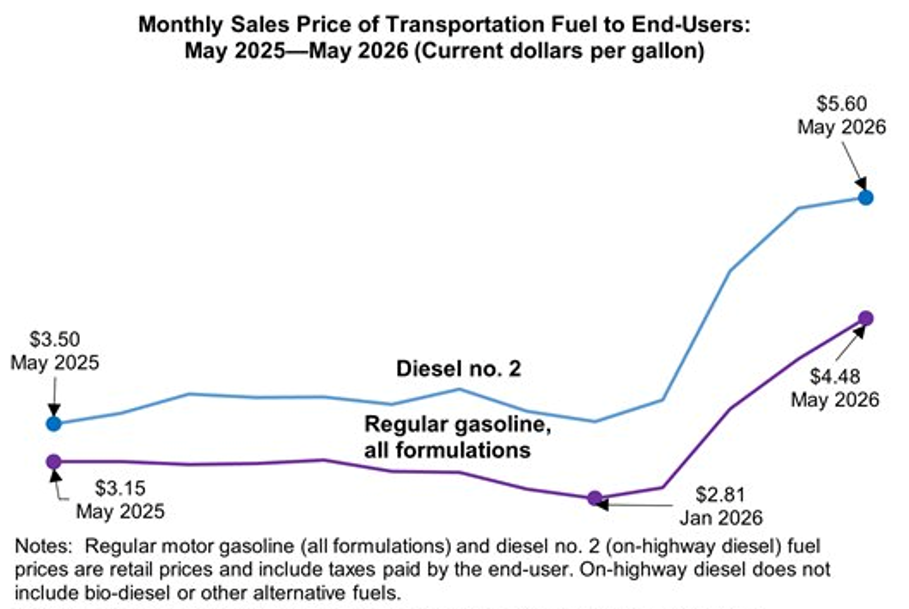
Figure 3. Monthly retail price of transportation fuel to end-users, May 2025–May 2026. Source: U.S. Energy Information Administration / Bureau of Transportation Statistics.
Freight costs are surging — fuel is the driver
The Producer Price Index for long-haul truckload freight jumped about 11% in a single month (April 2026) and roughly 20% year-over-year — back near all-time highs. The cause is diesel: trucking rates carry fuel surcharges that move with diesel prices, so the recent fuel spike passed straight through into freight costs. The result is that moving product is getting more expensive at the same time the product itself is — pushing total delivered cost up from two directions.
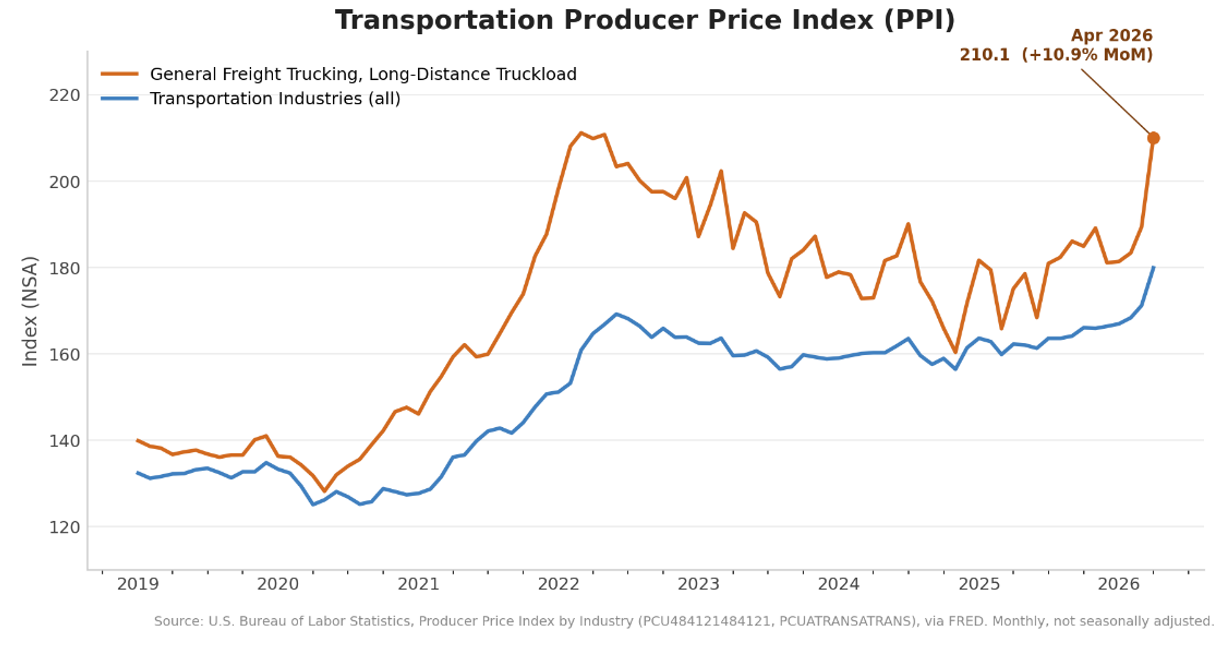
Figure 4. Transportation Producer Price Index, 2019–2026. Source: U.S. Bureau of Labor Statistics PPI (via FRED); monthly, not seasonally adjusted.
Reframing this price cycle
It’s worth stepping back on how to read this cycle. Normally, a sharp run-up in lubricant prices is a demand story — prices rise, buyers pull back or trade down, and the market cools itself off. That framework doesn’t fit 2026. Demand has actually been soft for the past few years, with no price increases in 2025. What’s driving today’s increases is supply: the loss of Group III base oil out of the Middle East and operational outages at major producers.
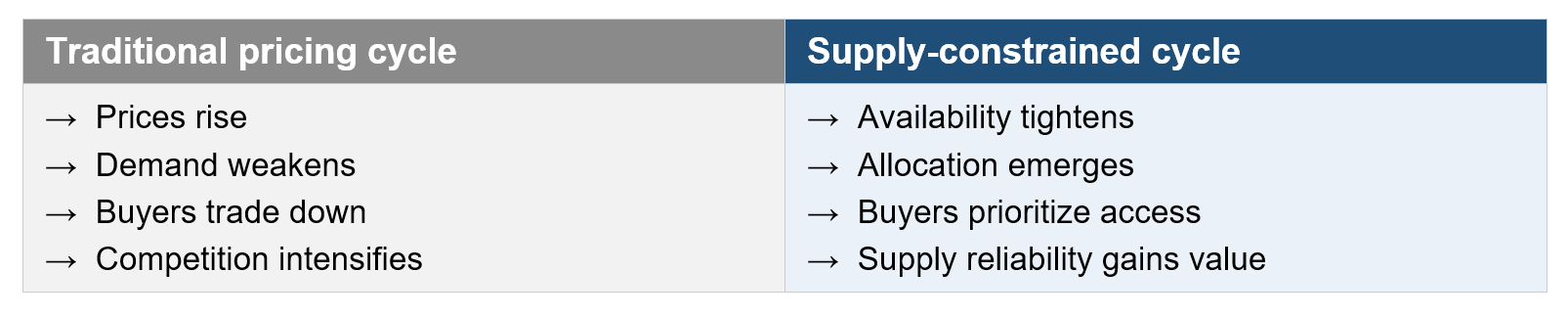
What this means — two key shifts
- Price increases now hit almost immediately. The gap between a supplier announcing an increase and it taking effect has dropped from about 30 days to roughly two weeks, sometimes just a day or two. When a price notice comes, there’s far less time to order ahead at the old price.
- Getting product matters as much as the price. Supply is tight, suppliers are rationing 100% allocation and starting to allocate below 100% for synthetics.
What to watch
A fourth round of increases is already forming. Even if the Middle East situation resolved tomorrow, full supply recovery could stretch into 2027 — so expect continued tightness across base oils, synthetics, low-viscosity grades, and glycol-based products like antifreeze and TEG.
What Hampel Oil Is Doing to Support & Protect You
Reliable supply
We maintain multiple sourcing relationships across suppliers and diverse product lines to ensure continuity — even in constrained markets. This lets us give you options and help keep your operations running.
Transparent pricing
All price adjustments are tied directly to documented supplier increases. We don’t speculate or add margin beyond cost changes, to minimize the effect on you.
Long-term partnership
With over 50 years of experience, Hampel Oil has navigated market disruptions for decades. Our focus remains simple: protect your supply, communicate clearly, and support your business. We’re committed to helping you navigate this environment with stability, transparency, and dependable service.

Questions about your specific order?
Reach out to your Hampel Oil account representative. We’re glad to talk through pricing, availability, and timing for the specific products you buy.
Continue checking back to see the most recent industry updates.

SHARE THIS